
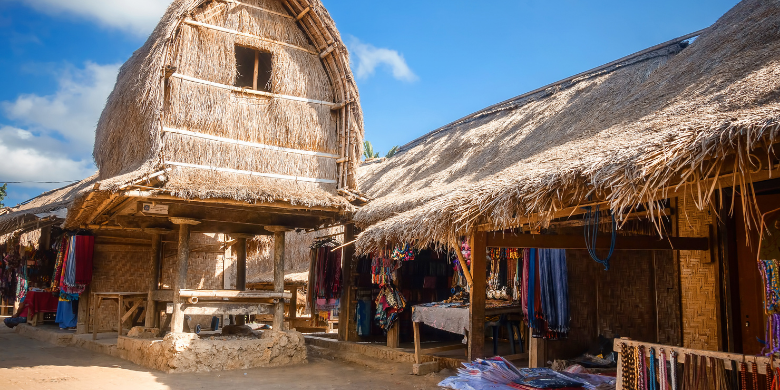
Lombok is famous for its beaches, culture, and Mount Rinjani, but one of its most fascinating cultural treasures is its traditional house. Known as the Sasak traditional house, this unique building reflects the wisdom, lifestyle, and heritage of the indigenous Sasak people of Lombok.
At first glance, a traditional Sasak house looks simple. It is made from natural materials such as bamboo, wood, thatch, and clay. But behind this simplicity lies a design that is full of meaning and practical wisdom.
One of the most distinctive features of the Sasak house is its roof, which is made from dried grass or alang-alang. This thick natural roofing helps keep the house cool during hot weather and protects it from rain. The walls are usually woven from bamboo, allowing airflow and creating a comfortable indoor temperature.
Another interesting feature is the floor. In some traditional Sasak houses, the floor is made from a mixture of clay and buffalo dung. While this may sound unusual to outsiders, it actually helps strengthen the floor, reduce dust, and even repel insects. It is a practical technique passed down through generations.
The layout of the house also has cultural significance. Traditional Sasak homes are often divided into specific spaces for sleeping, cooking, storing harvests, and receiving guests. Every part of the house reflects family life and community values.
The entrance design is also unique. Many Sasak houses have low doors, requiring visitors to bow slightly when entering. This symbolizes respect and humility—important values in Sasak culture.
Traditional villages like Sade and Ende in Lombok still preserve these houses today. Visitors can walk through the villages and see how local families continue to maintain traditional architecture while preserving customs and daily traditions.
The Sasak traditional house is not only a place to live, but also a symbol of harmony between humans and nature. Built with local materials and adapted to the environment, these houses show how traditional communities created sustainable architecture long before modern green building concepts existed.
Today, the traditional house of Lombok has become an important cultural attraction. Tourists visit not only to admire the architecture, but also to learn about Sasak traditions, weaving culture, local ceremonies, and daily life.
In a world filled with modern buildings and urban lifestyles, the traditional house of Lombok reminds us that simplicity can be beautiful, meaningful, and sustainable.
More than just a building, the Sasak traditional house is a reflection of Lombok’s soul—rich in tradition, wisdom, and cultural pride.